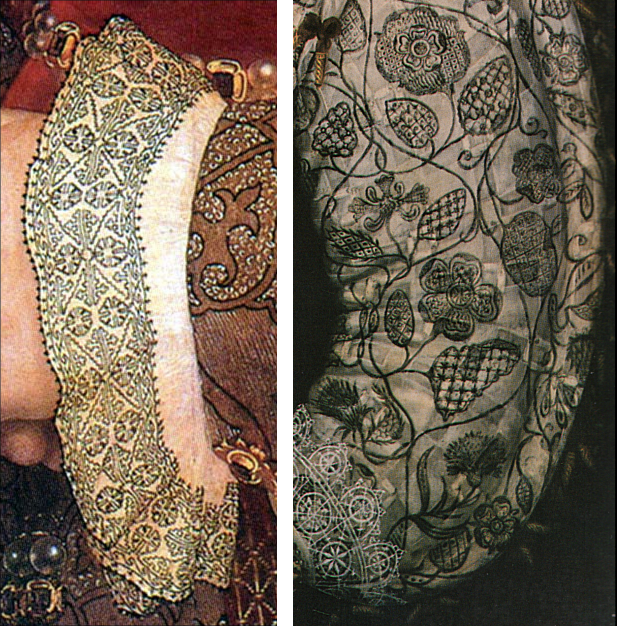
 For those of you who don't know what blackwork is, it's a type of embroidery that is from before the 1500's. The beautiful embroidery gained popularity and the common name of "Spanish work" when introduced to England by Catherine of Aragon when she came back from Spain with chemises detailed with the intricate work. Geoffery Chaucer references what can be construed as blackwork in his Canterbury Tales but the fashion lost popularity in the 17th century. The image to the right shows two examples of black work. The simpler line design on the left are from the 1530's where as the larger, filled example on the right is from the 1590's.
 This new web reference is made available by the author and, while you cannot re-post it without permission, the patterns are great for personal use! The book, Ensamplario Atlantio: Being a Collection of Filling Patterns Suitable for Blackwork Embroidery, is published here in Massachusetts and is filled with dozens of the smaller blackwork patterns used to fill the larger motifs like those used to fill the work on the right half of the image above.
So if you're looking for inspiration for a new project, look no further! Direct your cursor HERE to get your hands on this book!


